



Updated for 2026. As retirement approaches, many of us start dreaming of the perfect place to spend our golden years. But choosing a retirement destination isn’t just about pretty scenery — it’s about balancing affordability, healthcare quality, visa reality, and day-to-day quality of life. The right destination can stretch a fixed income dramatically; the wrong one can quietly drain it.
[gspeech]
We’ve refreshed this guide for 2026 with current residency requirements and honest cost expectations for ten of the world’s most popular retirement destinations. One important note up front: a country can only be a “best place to retire” if you can legally stay there. That’s why, for each destination, we lead with the actual 2026 visa path — including two famous countries where the retirement door has mostly closed.
How the 10 compare at a glance (2026)
| Destination | Main retirement/residency path | 2026 financial requirement | Relative cost of living |
|---|---|---|---|
| Portugal | D7 passive-income visa | €920/month single (tracks minimum wage), plus ~€11,040 savings | Moderate |
| Panama | Pensionado visa | $1,000/month lifetime pension | Low–moderate |
| Costa Rica | Pensionado residency | $1,000/month lifetime pension | Moderate |
| Spain | Non-lucrative visa | €28,800/year (400% of IPREM), +€7,200 per dependent | Moderate |
| Mexico | Temporary resident visa | Roughly $4,500–$4,700/month income or ~$76,000–$79,000 in savings (consulates vary) | Low–moderate |
| Italy | Elective residence visa | ~€31,000/year passive income per applicant (consular discretion) | Moderate |
| Thailand | Non-Immigrant O / O-A (age 50+) | ฿800,000 (~$23,000) in a Thai bank or ฿65,000/month income | Low |
| Malaysia | MM2H (tiered) | Fixed deposit: $150,000 Silver / $500,000 Gold / $1M Platinum | Low |
| New Zealand | Temporary Retirement Visitor Visa (age 66+) | NZD $750,000 invested for a 2-year visa | High |
| Australia | No new retirement visa (405/410 repealed) | Pathway exists only for former retirement-visa holders | High |
1) Portugal

Portugal remains the benchmark that other retirement destinations get measured against: a mild Atlantic-Mediterranean climate, strong healthcare, walkable towns, and one of Western Europe’s lower costs of living — though prices in Lisbon, Porto, and the popular Algarve coast have climbed noticeably over the past few years as expats have poured in.
The practical path for retirees is the D7 passive-income visa. The income floor tracks Portugal’s national minimum wage, which rose to €920 per month in January 2026 (about €11,040 per year) for a single applicant, plus roughly 50% more for a spouse. Consulates also expect savings of about one year’s income in a Portuguese bank account. Because the threshold is pegged to the minimum wage, it rises a little each January — confirm the current figure on Portugal’s official visa portal before applying.
Where to look: the Algarve for coast and golf, Setúbal for seafood and proximity to Lisbon without Lisbon prices, Aveiro (“the Venice of Portugal”) for canals and community, and Central Portugal for traditional villages and genuinely low housing costs. For a deeper dive, see our full guide to the pros and cons of retiring in Portugal.
2) Panama
Panama has arguably the single most retiree-friendly residency program in the Americas. The famous Pensionado visa requires a verifiable lifetime pension of just $1,000 per month — U.S. Social Security qualifies — and comes with a menu of legislated senior discounts on everything from airfare and hotels to utilities, medicine, and restaurant meals.
Day to day, Panama is unusually easy for Americans: the country uses the U.S. dollar, Panama City has modern hospitals and an international airport with direct U.S. flights, and there are established expat communities in the cooler highland town of Boquete and the Pacific beach town of Coronado. Political and economic stability rank among the region’s best.
The trade-offs: lowland heat and humidity most of the year, a rainy season that’s no joke, and a capital city whose costs now approach mid-tier U.S. metros in the nicer neighborhoods. Outside the city, a couple can still live comfortably on a budget that would feel tight back home.
3) Costa Rica
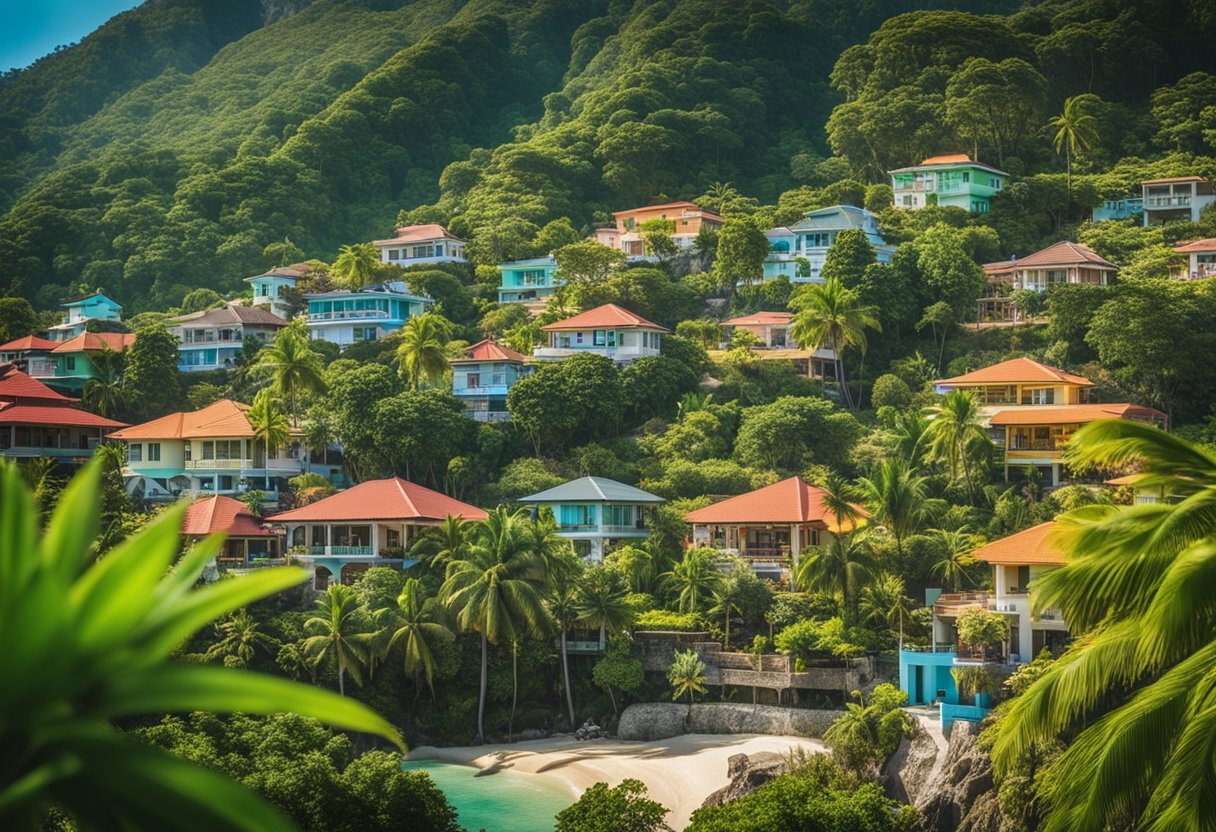
Costa Rica’s “Pura Vida” reputation is well earned: a stable democracy with no standing army, extraordinary biodiversity, and a large, settled American expat population, especially in the Central Valley and Guanacaste.
The Pensionado residency category requires a lifetime pension of at least $1,000 per month — again, Social Security counts — and one qualifying pension covers your spouse and dependent children. Residents join the national healthcare system (the “Caja”), paying a monthly contribution scaled to declared income; many expats pair it with private care, which is high quality and far cheaper than U.S. equivalents.
Know before you go: Costa Rica is no longer the bargain it was 15 years ago. Imported goods and cars are heavily taxed, and popular beach towns carry near-U.S. price tags. Budget-minded retirees do better in the Central Valley than on the coast. Approval timelines for residency commonly run 8–14 months, so start the paperwork early.
4) Spain
Spain offers big-country variety — Mediterranean beach towns, sophisticated cities, green Atlantic north — with excellent healthcare and high-speed rail tying it together. Favorite retiree bases include Valencia (city amenities plus coast), the Costa Blanca towns of Jávea and Torrevieja, Nerja on the Costa del Sol, and Málaga’s increasingly international old town.
The retirement route is the non-lucrative visa (NLV) — residency without the right to work, including remote work. The financial test is 400% of Spain’s IPREM index: for 2026 that’s €28,800 per year (roughly $32,000) for the main applicant, plus €7,200 per year for each dependent. You’ll also need full private health coverage and a clean criminal record, and a new immigration regulation that took effect in May 2025 tightened procedures, so follow your consulate’s current checklist exactly.
Note that Spain’s NLV financial bar is meaningfully higher than Portugal’s D7 — a couple needs about €36,000 per year versus roughly €16,600 in Portugal. If your budget is the deciding factor, that comparison matters more than the brochures do.
5) Mexico
Mexico is the most practical choice on this list for millions of Americans — close enough to drive, direct flights everywhere, and mature expat hubs including Lake Chapala/Ajijic (the largest American retiree community outside the U.S.), San Miguel de Allende, Puerto Vallarta, and Mérida on the Yucatán Peninsula.
Residency is the catch people underestimate. Mexico’s temporary resident visa financial thresholds are pegged to the UMA index and have risen substantially: in 2026, U.S. consulates generally ask for monthly income around $4,500–$4,700, or savings/investment balances of roughly $76,000–$79,000 maintained over the past year (exact dollar figures vary by consulate and exchange rate). Permanent residency has higher bars still. Many retirees qualify via the savings route even when their monthly income falls short.
Once you’re in, the value is hard to beat: a couple can live well in Chapala or Mérida on $2,500–$3,500 per month including rent, private healthcare in major cities is good and affordable, and the climate menu runs from “eternal spring” highlands to Caribbean beach.
6) Italy
Italy trades purely on quality of life: food, art, landscape, and a pace of daily living that retirement was practically invented for. Puglia and the rest of the Mezzogiorno offer dramatically lower living costs than Tuscany or the big northern cities, while Veneto and the Ligurian coast suit retirees who want culture and mild weather with bigger budgets.
The route in is the elective residence visa, which requires documented passive income of roughly €31,000 per year per applicant — pensions, annuities, rents, and investment income count; work income (including remote work) does not. Consulates apply real discretion here, and several U.S. consulates expect the ~€31,000 per adult, so treat the figure as a floor.
The sweetener many retirees miss: Italy offers a 7% flat tax regime on all foreign income for foreign pensioners who settle in southern towns of up to 30,000 residents (Sicily, Calabria, Sardinia, Campania, Basilicata, Abruzzo, Molise, Puglia), good for up to ten years. For where to actually settle, see our guide to the best places to live in Italy for expats.
7) Thailand
Thailand delivers the most lifestyle per dollar of any destination on this list. Chiang Mai in the northern mountains combines a cooler climate, rich culture, and remarkably low costs; Hua Hin offers a relaxed seaside pace with golf; Phuket and Koh Samui bring resort-island living; and Bangkok provides world-class private hospitals that have made Thailand a global medical-tourism hub.
For retirees aged 50 and over, the long-stay retirement route (Non-Immigrant O / O-A) requires either ฿800,000 (about $23,000) parked in a Thai bank account or monthly income of ฿65,000 (about $1,900), plus qualifying health insurance for the O-A version. Extensions are annual, and the bank balance must be seasoned and maintained — this is a residency you renew, not a path to permanent status.
A frugal single retiree can live on well under $1,500 a month outside Bangkok; a comfortable couple’s budget of $2,000–$3,000 buys a lifestyle that would cost multiples of that in the U.S. The trade-offs are distance from family, hot-season heat and seasonal air-quality issues in the north, and paperwork that rewards patience.
8) Malaysia
Malaysia quietly outscores flashier rivals on the fundamentals: excellent and affordable private healthcare with internationally trained, English-speaking doctors; modern infrastructure; genuinely multicultural food and society; and some of Asia’s best-value city living in Kuala Lumpur and Penang. English is widely spoken — a real advantage over most of this list.
The residency program, Malaysia My Second Home (MM2H), was overhauled in 2024 into tiers built around a fixed deposit in a Malaysian bank: Silver at USD $150,000, Gold at USD $500,000, and Platinum at USD $1 million, with visa length and privileges scaling by tier (a lower special-economic-zone tier exists for younger applicants). Portions of the deposit can be withdrawn for approved purposes like property purchase and medical costs, but the commitment is substantial — this program now favors retirees with meaningful savings rather than those living month to month on a pension.
If you clear the deposit hurdle, ongoing living costs are among the lowest of any developed-infrastructure country: a couple can live comfortably in Penang for $1,800–$2,500 a month.
9) New Zealand

On lifestyle alone, New Zealand belongs near the top of any list: spectacular landscapes, low crime, clean air, excellent healthcare, and retiree-favorite towns like Tauranga and the Coromandel Peninsula. The honest caveat is that moving there in retirement is realistic only for the well-funded.
New Zealand’s Temporary Retirement Visitor Visa requires applicants to be 66 or older and to invest NZD $750,000 (roughly US $450,000) in acceptable New Zealand investments — and even then it grants only a two-year stay, renewable by maintaining the investment. There is no general “move here on your pension” pathway. Add a high cost of living (housing especially) and 12+ hours of flying to reach the U.S. mainland, and New Zealand is best treated as a dream for those with substantial assets — or as an extended-stay destination rather than a permanent move.
10) Australia
Australia earns its spot for livability — superb healthcare, sunshine, coastal cities like the Gold Coast and Newcastle that regularly top retirement-livability surveys — but it now comes with the biggest asterisk on this list: Australia no longer offers a retirement visa to new applicants. The old Retirement (subclass 410) and Investor Retirement (subclass 405) visas were closed, and the current “retirement visa pathway” to permanent residency exists only for people who already held one of those repealed visas.
For everyone else, the realistic options are long visitor visas for extended stays, or family-sponsored parent visas for those with adult children who are Australian citizens or permanent residents — a queue measured in years and significant fees. If Australia is the dream, plan around long annual visits rather than a permanent move, and enjoy one of the world’s great lifestyle countries on tourist terms.
Factors to consider when choosing a retirement destination
Visa reality first
Start with the legal path, not the scenery. As this list shows, requirements in 2026 range from a $1,000 monthly pension (Panama, Costa Rica) to six- and seven-figure deposits (Malaysia’s upper tiers, New Zealand) to effectively closed (Australia). Thresholds change — several are indexed to local minimum wages or inflation measures and rise annually — so always verify the current figure with the official immigration authority or your nearest consulate before committing.
Cost of living
There is no single “cost of Country X” — location and lifestyle swing budgets by 2x or more within the same country. Lisbon is not rural Central Portugal; Bangkok is not Chiang Mai; Panama City is not Boquete. Build your budget around a specific town, rent for six to twelve months before buying anything, and stress-test the numbers against a weaker dollar. For a dedicated budget comparison, see our guide to the cheapest countries for Americans to retire.
Healthcare quality and access
Every destination on this list has good private healthcare in its major cities, often at a fraction of U.S. prices. The critical U.S.-side fact: Original Medicare generally does not pay for care outside the United States. Most expat retirees carry local or international private insurance, and many keep Medicare Part B active as a fallback for eventual return — weigh that premium against the risk of re-enrollment penalties. Our guide to Medicare enrollment periods and late penalties covers how those penalties accrue.
Taxes — moving abroad doesn’t end your IRS relationship
U.S. citizens file U.S. tax returns on worldwide income no matter where they live. The Foreign Earned Income Exclusion applies only to earned income — it does not shelter pensions, Social Security, or investment income, which is what most retirees live on. What actually matters is the host country’s treatment of foreign retirement income (Italy’s 7% southern regime and Panama’s territorial-leaning system are notably friendly) and whether a tax treaty prevents double taxation. Budget for a cross-border tax professional in year one.
Social Security logistics
The good news: Social Security benefits are payable to U.S. citizens living in almost every country on this list, via direct deposit to U.S. or many foreign banks. Before you claim, make sure you understand your timing options — our Social Security full retirement age guide walks through how claiming age changes your monthly benefit, which matters doubly when that benefit is also your visa qualification.
Language, community, and distance
Established expat communities (Lake Chapala, the Algarve, Boquete, Chiang Mai) make the transition dramatically easier, but they also insulate you from the local culture and can inflate prices. Consider how often you’ll realistically see family: Mexico and Panama are short flights from the U.S.; Thailand, Malaysia, New Zealand, and Australia are not. That one factor sends more retirees home than money does. If language is a dealbreaker, start with our list of the cheapest English-speaking countries to live in.
A sensible first-year sequence
However appealing the destination, the same sequence protects you everywhere: scout in person during the worst season, not the best; rent for at least six months before buying; map your healthcare (nearest quality hospital, insurance accepted, medication availability) before signing a lease; start the residency paperwork early, since approvals commonly take 6–14 months; set up banking and a cross-border tax plan; and only then consider buying property or shipping your household.
FAQ: Retiring abroad in 2026
What is the cheapest country on this list to qualify for?
Panama and Costa Rica, whose pensionado programs each require a lifetime pension of $1,000 per month — an amount below the average U.S. Social Security retirement benefit. Portugal’s D7 (€920/month for a single applicant in 2026) is the lowest bar in Europe.
Can I use Social Security to qualify for a retirement visa?
Yes, in most programs. Social Security is a lifetime government pension, which is exactly what Panama’s and Costa Rica’s pensionado categories require, and it counts as qualifying passive income for Portugal’s D7, Spain’s non-lucrative visa, and Italy’s elective residence visa. SSA’s Benefit Verification Letter (apostilled and translated) is the standard proof.
Does Medicare work overseas?
Generally no — Original Medicare does not cover routine care outside the U.S. apart from narrow exceptions. Plan on local or international private health insurance, and decide deliberately whether to keep paying Part B premiums for an eventual return.
Which countries have effectively closed the door to retirees?
Australia closed its retirement visas (subclasses 405 and 410) to new applicants, leaving only a pathway for former holders. New Zealand’s only dedicated option requires age 66+ and a NZD $750,000 investment for a two-year temporary visa. Both remain wonderful places to visit at length on visitor visas.
Do I still pay U.S. taxes if I retire abroad?
Yes. U.S. citizens and green-card holders file on worldwide income regardless of residence. The Foreign Earned Income Exclusion only applies to earned income — not pensions, Social Security, or investment income — so most retirees rely on tax treaties and foreign tax credits instead. Get professional cross-border advice before you move, not after.
The best place to retire in the world isn’t a ranking — it’s the intersection of where you can legally stay, what your income supports, how far you’re willing to be from family, and what makes you want to get up in the morning. Use this list to shortlist two or three candidates, then go spend a shoulder-season month in each. The destination that still charms you in its worst weather is the one worth the paperwork.

